


Say goodbye to ingrown toenails – forever!
With a 99.9% success rate, we at Footcare Place can guarantee that you will never suffer from ingrown toenails again. Our “Let Your Toenails Prevail” signature procedure gets to the root of the problem so you can have immediate relief and return to your normal daily activities. An ingrown toenail is when the nail is curved downward and grows into the skin, usually at the nail borders (the sides of the nail). This irritates the skin, often resulting in pain, redness, swelling, and warmth in the toe. If an ingrown nail causes a break in the skin, bacteria may enter and result in an infection, which is often marked by the expression of a yellow, white, brown or green fluid and a foul odour. Give yourself the gold standard treatment you deserve. Get “Let Your Toenails Prevail” and never suffer from ingrown toenails again. For further information on ingrown toenails, please see our article: Ingrown toenails – causes, symptoms, treatment and prevention.
Ingrown Toenails: Causes, Symptoms, Treatment and Prevention
An ingrown toenail is when the nail is curved downward and grows into the skin, usually at the nail borders (the sides of the nail). This irritates the skin, often resulting in pain, redness, swelling, and warmth in the toe.  If an ingrown nail causes a break in the skin, bacteria may enter and result in an infection, which is often marked by the expression of a yellow, white, brown or green fluid and a foul odour. Ingrown toenails should be treated as soon as they develop in order to prevent or treat an associated infection. If you are uncertain as to the severity of your ingrown toenail, seek advice from your Chiropodist immediately. Your Chiropodist will also be able to recommend a home care or a professional treatment plan that prevents the recurrence of this condition.
Symptoms of ingrown toenails
Ingrown toenails exhibit some or all of the following symptoms:
- A nail that curves downward into the skin
- Pain, redness, swelling and warmth in the toe
- Extra skin with red, inflamed tissue growing around the point of the toenail
- Expression of a white, yellow or green fluid accompa

Conditions that can place tension on the plantar fascia and lead to heel pain include:
- Flexible flat feet
- High-arched feet
- Tight Achilles tendon
- Weight gain or excess weight
- High impact sports
Treatments such as non-steroidal anti-inflammatory drugs and cortisone injections may mask the pain without correcting the underlying foot problem. As a result of the numerous cases of heel pain related conditions we see, our team has created a unique comprehensive treatment plan which centres around two main procedures – orthotics and foot mobilization technique (FMT). We are so confident with this treatment approach that we have created a video that allows you to see exactly how this combination of orthotics and FMT will help permanently solve your h

KNEE PAIN
The patella, commonly referred to as the “knee cap”, acts as a pulley system to transmit power from the upper leg (thigh bone) to the lower leg (shin bone). Normally, as the knee bends, the patella slides smoothly along a groove in the thigh bone. However, under certain conditions the patella may experience forces that push it against the sides of the groove, causing pain. Additionally, inflammation and roughening of the smooth underside of the patella may occur. Collectively, this process is referred to as Patellofemoral Syndrome (PFS) and it is responsible for knee pain. Patellofemoral Syndrome (PFS) is one of the most common causes of knee pain in runners. The pain is usually located in the front part of the knee, but it may be on the inside, outside, or vaguely located. Knee pain can feel either sharp or dull, and is often made worse by squatting or walking down stairs. Knee pain is also sometimes accompanied by grinding or clicking sounds. Predisposing factors to Patellofemoral Syndrome (PFS) include; biomechanical abnormalities such as overpronation, “knock knees” or poor pelvic control, muscle tightness and weakness. At Footcare Place Toronto, treatment for knee pain includes:
- Pain management w

Bunions are misaligned big toe joints that can become swollen and tender, causing the first joint of the big toe to slant outward, and the second joint to angle toward the other toes.  Bunions tend to be hereditary, but can be aggravated by shoes that are too narrow in the forefoot and toe. At Footcare Place Toronto, non-surgical options for bunions include custom-fitted orthopedic shoes that may have extra-depth or width to accommodate the widening of the forefoot. Custom-made orthotics are also often prescribed to correct the underlying foot problem responsible for the bunion formation.
A diabetic foot ulcer is an open sore or wound that occurs in approximately 15 percent of patients with diabetes, and is commonly located on the bottom of the foot. Of those who develop a foot ulcer, six percent will be hospitalized due to infection or other ulcer-related complication. Diabetes is the leading cause of nontraumatic lower extremity amputations in the United States, and approximately 14 to 24 percent of patients with diabetes who develop a foot ulcer have an amputation. Research, however, has shown that the development of a foot ulcer is preventable. Who Can Get a Diabetic Foot Ulcer? Anyone who has diabetes can develop a foot ulcer. Native Americans, African Americans, Hispanics and older men are more likely to develop ulcers. People who use insulin are at a higher risk of developing a foot ulcer, as are patients with diabetes-related kidney, eye, and heart disease. Being overweight and using alcohol and tobacco also play a role in the development of foot ulcers. How do Diabetic Foot Ulcers Form? Ulcers form due to a combination of factors, such as lack of feeling in the foot, poor circulation, foot deformities, irritation (such as friction or pressure), and trauma, as well as duration of diabetes. Patients who have diabetes for many years can develop neuropathy, a reduced or complete lack of ability to feel pain in the feet due
Morton’s Neuroma: Burning, Tingling, Numbness in Your Foot, Difficulty Walking If you’re suffering with radiating pain in your foot until the point where you can’t even take a step without being in agony, you may have a condition called Morton’s Neuroma. With this condition, you may feel like there’s some sort of object in your sock that is causing you irritation, but every time you look, nothing is there. You may be surprised to know that the “object” is really an enlarged nerve under the ball of your foot that only gets worse with time. However, there is good news. The hidden signs of Morton’s Neuroma Learn how to eliminate the risk of permanent damage to your feet before it is too late. What may seem like something minor to you, could develop into something much more serious if not treated properly! Therefore, what you choose to do with this information may make the difference between a pain-free life and one filled with the miserable repercussions of not acting when there was still time. What Is Morton’s Neuroma? Morton’s Neuroma, also known as intermetatarsal neuroma, is a condition where the laterel plantar nerve combines with the the medial plantar nerve to form one large nerve between the third and fourth toes. As above this nerve lies the deep transverse metatarsal liga

Fungal nails can be an embarrassing disease. Thankfully, it is easily preventable. As can be derived from the word, a fungus is a type of microorganism that forms in warm, most climates. A fungal nails often develops as a result of walking barefoot on gym locker floors or wearing tight shoes that cause your feet to sweat and remain damp. To avoid contracting fungal nails, simply refrain from walking barefoot in communal locations and wear shoes that allow your feet to breathe.
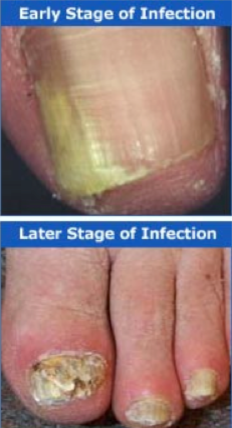 Fungal nail has a number of distinguishing characteristics. It can be identified by toenails that have suddenly become abnormall
Your feet deserve the best so treat them that way. We at Footcare Place, have developed the leading formula in developing custom made orthotics that truly work. Our signature Footcare Place Sole Supports, are scientifically proven to treat a wide range of foot and lower limb problems. Our specialists are experts in creating these supports so that they form to your foot correctly, zeroing in on the problem area. You will immediately be on your way to having happier healthier feet!
Eliminate the need for surgical interventions. Foot mobilization Techniques (FMT) is the solution to treating certain foot and lower limb problems. Mobilization techniques have been used in other areas of medicine for decades. Now we know that this treatment can help our feet too. Utilizing a hands-on approach to mobilize the joints, FMT reduces the need for surgery or medication. Our educated team is trained in this new innovative treatment plan. Eliminate the need for surgery. Try FMT.